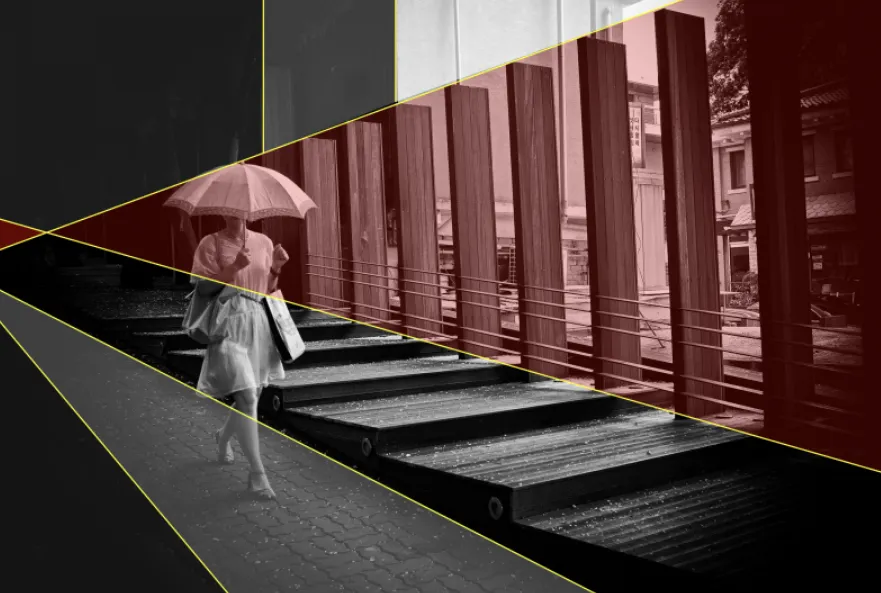
Photography is often about capturing a moment that lasts forever. Truly bringing out the enthusiasm of wild animals, the enormity of buildings, or the lively motion of activity requires more work than just snapping a picture. It needs ways to show how things move, how big or small they are, how they feel, and the liveliness of the subject itself. Static images can look nice, but photos that show movement and make you really feel part of what is happening are much more interesting to look at and really stand out. Mastering dynamic photography means using your camera not only to catch light, but also to show how movement and shapes look so that people looking at the pictures can feel it too. Exploring examples and tutorials on techniques can elevate your skills, and resources on this website can be a helpful starting point.
Contents
Emphasizing Movement Through Shutter Speed
One of the easiest ways to show action is by adjusting the shutter speed so the moving subject gets blurred. With a fast shutter speed, a photographer can stop action for a fraction of a second, capturing a bird in flight, a sprinter at the beginning of their race, or a wave hitting land. This makes the picture look its best and lets people notice things on the screen they would normally miss without a magnifying glass. Conversely, if you leave your shutter speed lower, you might get smears in the image that look like movement, which can help show how quickly something is moving or flowing. This technique works really well for showing how water moves, car lights at night, or for making a scene look faster in sports. Panning, which means moving your camera with something moving while keeping your shutter speed slow, can help you keep the moving object in focus but make the background turn blurry, making the action look more dramatic. Experimenting with shutter speed is important if you want to change how your photos look when things in the scene are moving.
Playing with Perspective and Scale
Capturing the power of subjects like buildings or big landforms often means changing how things look by changing the view and making things look bigger or smaller than they really are. When you shoot from a low angle, a building can look both more tall and grand than it really is. Conversely, shooting from an up-close view can help show small details and how big or small something really is. Including something familiar, like a person in a big scene or a car near a really big building, quickly shows how big or small other objects are, and helps make the focus of the photo feel more prominent. Wide-angle lenses make things look farther apart and make the viewer feel closer to all of the action happening in the scene. Manipulating your viewpoint and choosing different lenses can really help show how big or small your subject actually is.
Utilizing Light and Shadow for Drama
Light and shadow are a big part of photography, and how they work together can change how lively or how moody a photo turns out. Strong, directional light can cast hard shadows that make surfaces look more detailed, give a feeling of depth, and make the scene look like it has more room and space. This is especially useful for showing how subjects like architecture or the way an athlete’s muscles work are put together. Shooting during the evening hours, right after sunrise or just before sunset, gives you a softer kind of light that can make your photos look special and add more dimension. Backlighting can make the subject stand out by giving him a dark silhouette or putting bright edges around him to help separate him from the background and make the photo look more interesting. Understanding how light hits your subject and using shadows in interesting ways can really help make an image feel more special and give it more sense of depth.
Capturing Emotion and Intensity
Beyond just the physical pieces of a subject, really showing how strong or meaningful it is usually means trying to make people feel something about it. Wildlife photographers might take pictures of a fierce looking predator or show the caring behavior between different animals. In sports photography, you need to capture the very instant when an athlete is at their highest point. This means photographers need to pay attention, wait for the right moment, and be able to get on the same wavelength as what or who they’re taking pictures of. Sometimes, it’s just about trying to pick the right face or move so that people can really understand what you mean. In action photography, it’s about being able to get to the best spot to take a picture when the action is at its most exciting, or when you can really feel the emotion going on. Focusing on the eyes, body language, and facial expressions can help show how the person (or animal) is feeling inside, which can really connect the viewer to the photo.
Conclusion
Capturing the power of dynamic subjects in photography means you need to understand the basics, like how to use your camera, while also trying to think of creative ways to show movement. By using things like changing the shutter speed to show how something moves, using different angles and sizes, taking advantage of light and shadows for drama, and really trying to catch feeling and energy, photographers can make photos that go beyond a simple snapshot and actually express what’s happening in a scene in a strong way. These techniques help make a still photo feel like it’s moving, pulling the viewer in and making them feel like they are in the real scene when the photo was taken. Mastering these elements can help your photos move beyond just showing something and start to really show what makes it special and memorable.